


Page 29 - Curriculum Visions Dynamic Book. To close the book, close the tab.
P. 29
Waves and tides
Twice a day – as the tide comes in and as
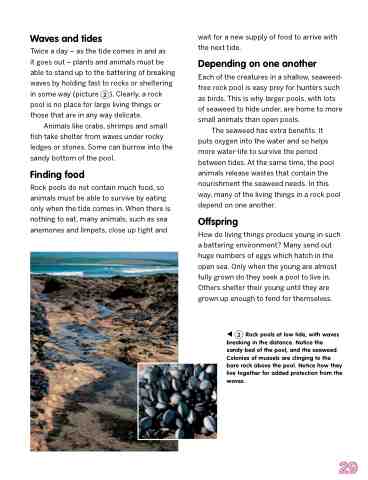
it goes out – plants and animals must be able to stand up to the battering of breaking waves by holding fast to rocks or sheltering in some way (picture ). Clearly, a rock pool is no place for large living things or those that are in any way delicate.
Animals like crabs, shrimps and small fish take shelter from waves under rocky ledges or stones. Some can burrow into the sandy bottom of the pool.
Finding food
Rock pools do not contain much food, so animals must be able to survive by eating only when the tide comes in. When there is nothing to eat, many animals, such as sea anemones and limpets, close up tight and
wait for a new supply of food to arrive with the next tide.
Depending on one another
Each of the creatures in a shallow, seaweed- free rock pool is easy prey for hunters such as birds. This is why larger pools, with lots of seaweed to hide under, are home to more small animals than open pools.
The seaweed has extra benefits. It
puts oxygen into the water and so helps more water-life to survive the period between tides. At the same time, the pool animals release wastes that contain the nourishment the seaweed needs. In this way, many of the living things in a rock pool depend on one another.
Offspring
How do living things produce young in such a battering environment? Many send out huge numbers of eggs which hatch in the open sea. Only when the young are almost fully grown do they seek a pool to live in. Others shelter their young until they are grown up enough to fend for themselves.
Rock pools at low tide, with waves breaking in the distance. Notice the
sandy bed of the pool, and the seaweed. Colonies of mussels are clinging to the bare rock above the pool. Notice how they live together for added protection from the waves.
29


