


Page 28 - Curriculum Visions Dynamic Book. To close the book, close the tab.
P. 28
28
Rock pools
Some animals can live in rock pools, even though they are battered by waves, if they are adapted in the right way.
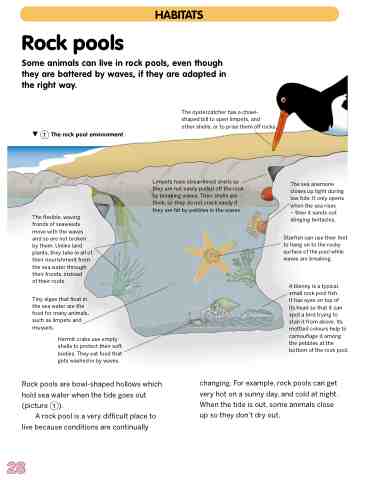
The rock pool environment.
The flexible, waving fronds of seaweeds move with the waves and so are not broken by them. Unlike land plants, they take in all of their nourishment from the sea water through their fronds, instead
of their roots.
Tiny algae that float in the sea water are the food for many animals, such as limpets and mussels.
Hermit crabs use empty shells to protect their soft bodies. They eat food that gets washed in by waves.
Rock pools are bowl-shaped hollows which hold sea water when the tide goes out (picture ).
A rock pool is a very difficult place to live because conditions are continually
The sea anemone closes up tight during low tide. It only opens when the sea rises
– then it sends out stinging tentacles.
Starfish can use their feet to hang on to the rocky surface of the pool while waves are breaking.
A blenny is a typical, small rock pool fish.
It has eyes on top of
its head so that it can spot a bird trying to stab it from above. Its mottled colours help to camouflage it among the pebbles at the bottom of the rock pool.
changing. For example, rock pools can get very hot on a sunny day, and cold at night. When the tide is out, some animals close up so they don’t dry out.
HABITATS
The oystercatcher has a chisel- shaped bill to open limpets, and
other shells, or to prise them off rocks.
Limpets have streamlined shells so they are not easily pulled off the rock by breaking waves. Their shells are thick, so they do not crack easily if they are hit by pebbles in the waves.


