


Page 31 - Curriculum Visions Dynamic Book. To close the book, close the tab.
P. 31
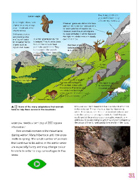
Golden eagle
Great height allows birds of prey to survey a large area – important when prey is scarce.
Mountain goats are skilled climbers and can climb on near-vertical cliffs to reach patches of vegetation. However, even they must migrate to lower altitudes in winter because the high mountain areas are deeply covered in snow.
Red deer graze on natural meadows in summer.
Ptarmigan
It is common for animals that use camouflage to change their colour with the seasons. Ptarmigan and mountain hare both turn white in winter. In summer, their coats are brown.
Few, if any, plants can grow on the bare rocky cliffs on mountain tops.
Alpine plants
Marmot
The dipper is adapted to fast flowing mountain streams
Cliff caves provide safe nesting sites and ‘launch pads’ for mountain birds of prey such as eagles and ravens.
Raven
In winter, ptarmigan do not hibernate. They scratch down through the snow to feed
on shrubs and lichens. They burrow under the snow to protect themselves from the weather whilst they sleep.
Tree line. The upper limit where a forest can grow.
Lynx
Few butterfly species are adapted to high altitudes because they need warmer conditions.
Apollo butterfly
Mountain hare
Some of the many adaptations that animals have to help them survive in the mountains.
example, needs a territory of 200 square kilometres!
Few animals remain in the mountains during winter. Many hibernate until the snow melts in spring. The small number of animals that continue to be active in the winter snow are especially hardy and may change colour to white in order to stay camouflaged in the snow.
Many rodents in high mountains live in a network of tunnels in the rocky soil. These provide a place to hibernate in winter. However, as rodents such as marmots (above) and voles (below) search among the rocks for food, they are easily spotted by predators such as eagles, weasels, lynx and foxes. To escape being caught, they are camouflaged by the colour of their fur and quickly take shelter in the rocks.
31


