


Page 30 - Curriculum Visions Dynamic Book. To close the book, close the tab.
P. 30
EXTREME HABITATS
Mountains
Mountains have cool summers and harsh, snowy winters. They are places where only the specially adapted can survive.
High mountains experience long, cold, snowy winters and short, wet, cloudy summers. Not only is the weather harsh, but soils are thin and stony and have little nourishment in them.
Mountain plants
Few plants can survive such conditions. Some of those that are adapted to cope with the cold and wind are called alpines. Most alpines are perennials. Few annual plants grow on mountains – it takes many
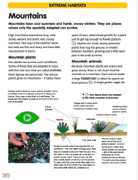
Alpines need to store as much heat as possible. Many are tufted, have furry leaves, and grow in dense, low bushes. Many even make their own antifreeze. The leaves are dark green, to soak up as much of the Sun’s heat as possible.
Hardy grasses
years of slow, determined growth for a plant just to get big enough to flower (picture ). Alpines are small, woody perennial plants that hug the ground, or shelter between boulders, growing just a little each year in the brief summer.
Mountain animals
Because mountain plants are scarce and grow slowly, there is not much food for animals on a mountain. Each animal needs a large territory in which to search for food (picture ). A single golden eagle, for
How alpine plants are adapted to the harsh mountain environment.
Sedges and mosses grow where water has been trapped and created bogs.
Insulating snow cover protects plants in winter.
Heather
Lichens cling to rocks. Edelweiss
Thin, poor soils
Alpines have to make good use of the short growing season. As soon as the snow melts, they shoot, flower and set seed – giving the spectacular blossoms for which mountains are so famous. The entire growing season may be only three months.
30
All alpine plants need to be adapted for dry conditions. This may seem strange when they may be covered in snow for half the year. But the water in snow is locked up as ice and so plants cannot use it. Then, as soon as the snow melts, harsh winds dry out the ground. To cope with this, even plants that seem tiny when seen on the surface may have deep tap roots that seek water far underground.


