


Page 27 - Curriculum Visions Dynamic Book. To close the book, close the tab.
P. 27
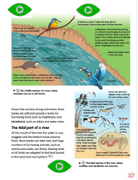
Otters nest in the bank, using underwater entrances.
Some trout will still be found in this part of the river but bream, chub and barbel are the more common types of fish.
Otters have webbed feet, a waterproof coat and sharp claws and teeth to catch food such as fish. They can even close their ears to stop water getting in.
The middle reaches of a river, where meanders are cut in soft banks.
those that are less strong swimmers. River banks are soft and provide a home for burrowing birds such as kingfishers, and mammals such as otters and water voles.
The tidal part of a river
At the mouth of the river the water is very sluggish and the bottom muds become thick. More plants can take root, and huge numbers of burrowing animals, such as worms and snails, can thrive. Wading birds of all kinds are adapted to find food buried in the sand and mud (picture ).
Kingfishers nest in holes that they dig for themselves in the outside bank of river channels.
A kingfisher catches food by sitting on a branch overhanging the river and looking for fish and other prey in the water. Then it dives down and catches its food with its strong, pointed stabbing beak before returning to its perch. Kingfishers hunt by day.
Weeds have their roots in the river mud.
Kingfisher
Ducks can dive into deeper water, catching fish and eating weeds.
decoMposers such as snails, worms and insect larvae live on the river bed.
Curlews probe with long, curling beaks deep in the mud for worms.
Rushes can tolerate salty water.
The avocet has an upward-curving beak to skim the watery mud for small insects. Like other wading birds, it has long legs and weighs very little, so it doesn’t sink into the mud.
The plover picks prey off the surface.
Sand hoppers, lugworms and razor shells burrow in the sands and muds.
The tidal reaches of the river, where mudflats and sandbanks are common.
27


