


Page 35 - Curriculum Visions Dynamic Book. To close the book, close the tab.
P. 35
Many hunters
With many animals using the meadow
for food, meadows attract many winged hunters such as hawks, that patrol by day, or owls, that patrol by night.
Burrowing is one way to make a home that is safe from these hunters. Rabbits and voles are among many burrowing animals that can thrive in a meadow.
Below the surface
The plants on the surface shed lots of leaves that rot and become food for soil
animals. The dung of grazing animals can be another source of food. Below the soil there may be tons of earthworms in each hectare of meadow. And there will be a small army of moles and other tunnelling animals trying to eat them. Tunnelling animals like moles have bodies shaped
so they can push themselves through the soil. They have strong, short, front legs and spade-like paws with sharp claws so they can dig rapidly.
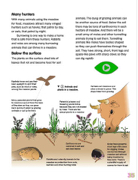
Kestrels hover and use their keen eyesight to spot their prey, such as mice or voles, among the meadow plants.
Many perennial plants that grow in meadows sprout from the base of the stem so they can grow back quickly if eaten by grazing animals or cut by farmers.
Animals and plants in a meadow.
Perennial grasses and flowering plants thrive because they are not shaded by trees. There are few annual plants in a meadow.
Farmers cut meadows and allow animals to graze. This stops trees from growing.
Earthworms are common in soil and eat dead leaves.
Rabbits and voles dig tunnels in the meadow as protection from owls, kestrels and other hunting birds.
Moles have powerful, short legs with claws for digging. Moles can burrow through meadow soil without being troubled by tree roots. There is
a plentiful supply of worms for them to eat.
35


