


Page 33 - Curriculum Visions Dynamic Book. To close the book, close the tab.
P. 33
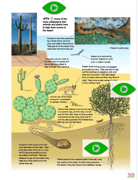
Kangaroo rats come out in the cool darkness of the night. Their long legs allow them to run very fast to escape predators such as snakes and foxes. They are adapted to get all the water they need from the moisture in the seeds they eat.
Plants such as the creosote bush have very long tap roots to find water. As with many plants in the desert, they also have small, leathery leaves.
Some of the many adaptations that animals and plants have to help them survive in the desert.
Scorpions use the poisonous tip of their tail to kill their prey and defend themselves. They get all of the water they need from the food they eat.
The cactus stores water in its stem, has no leaves and has protective spines to stop animals from eating it.
Pincers to grab prey.
Eagles and vultures fly at great heights to spot prey or dead animals.
Desert foxes are nocturnal scavengers and crafty hunters. They are able to dig out the burrows of kangaroo rats and even eat scorpions. They have large ears and eyes because they only feed at night. They have a keen sense of smell to find rotting meat.
Lizards use camouflage and quick movements to escape hunters.
Sidewinder snakes move across sand in a special way, so that only a small part of their skin rests on the burning hot surface at any time. This way of moving also prevents the snakes from sinking into the soft sand.
33


