


Page 36 - Curriculum Visions Dynamic Book. To close the book, close the tab.
P. 36
36
STEWARDSHIP
Thoughtless changes
When rivers are cleared out, the habitats for many living things may be lost. This is an example of poor stewardship.
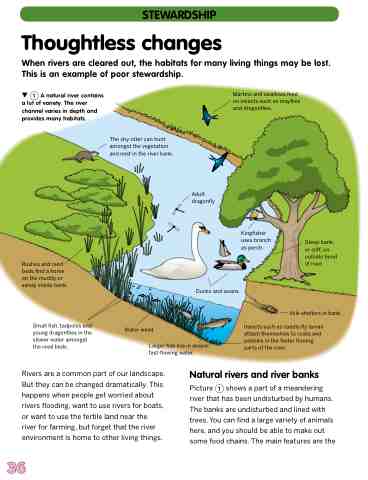
A natural river contains a lot of variety. The river channel varies in depth and provides many habitats.
Martins and swallows feed on insects such as mayflies and dragonflies.
Rushes and reed beds find a home on the muddy or sandy inside bank.
Small fish, tadpoles and young dragonflies in the slower water amongst the reed beds.
Ducks and swans
Rivers are a common part of our landscape. But they can be changed dramatically. This happens when people get worried about rivers flooding, want to use rivers for boats, or want to use the fertile land near the
river for farming, but forget that the river environment is home to other living things.
Natural rivers and river banks
Picture shows a part of a meandering river that has been undisturbed by humans. The banks are undisturbed and lined with trees. You can find a large variety of animals here, and you should be able to make out some food chains. The main features are the
The shy otter can hunt amongst the vegetation and nest in the river bank.
Water weed
Insects such as caddis fly larvae attach themselves to rocks and pebbles in the faster flowing parts of the river.
Larger fish live in deeper, fast-flowing water.
Adult dragonfly
Kingfisher uses branch as perch.
Steep bank, or cliff, on outside bend of river.
Vole shelters in bank.


