


Page 186 - Curriculum Visions Dynamic Book
P. 186
186
Providence City was hit like other cities with suburban growth in the automobile age. During the 1950s many people moved to new country suburbs, and away from the dilapidated housing and streets, so that the city population fell by nearly 40%.
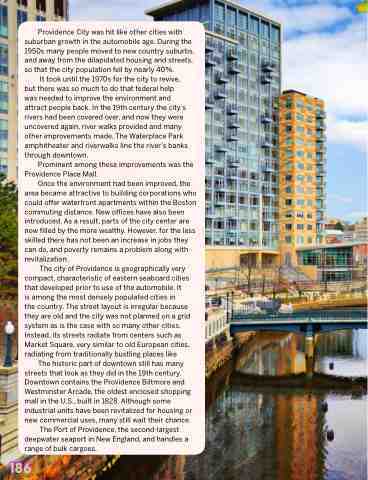
It took until the 1970s for the city to revive, but there was so much to do that federal help was needed to improve the environment and attract people back. In the 19th century the city’s rivers had been covered over, and now they were uncovered again, river walks provided and many other improvements made. The Waterplace Park amphitheater and riverwalks line the river’s banks through downtown.
Prominent among these improvements was the Providence Place Mall.
Once the environment had been improved, the area became attractive to building corporations who could offer waterfront apartments within the Boston commuting distance. New offices have also been introduced. As a result, parts of the city center are now filled by the more wealthy. However, for the less skilled there has not been an increase in jobs they can do, and poverty remains a problem along with revitalization.
The city of Providence is geographically very compact, characteristic of eastern seaboard cities that developed prior to use of the automobile. It
is among the most densely populated cities in
the country. The street layout is irregular because they are old and the city was not planned on a grid system as is the case with so many other cities. Instead, its streets radiate from centers such as Market Square, very similar to old European cities, radiating from traditionally bustling places like
The historic part of downtown still has many streets that look as they did in the 19th century. Downtown contains the Providence Biltmore and Westminster Arcade, the oldest enclosed shopping mall in the U.S., built in 1828. Although some industrial units have been revitalized for housing or new commercial uses, many still wait their chance.
The Port of Providence, the second-largest deepwater seaport in New England, and handles a range of bulk cargoes.


