


Page 24 - Curriculum Visions Dynamic Book. To close the book, close the tab.
P. 24
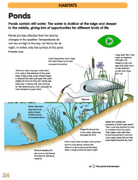
Ponds are less affected than the land by changes in the weather. Temperatures do not rise so high in the day, nor fall so far at night. In winter, only the surface of the pond freezes over.
Adult dragonflies have wings that allow them to fly from one pond to another.
Frogs start life in the water as tadpoles with gills, but develop lungs and legs that allow them to hop between ponds when they grow up.
The heron has long legs which allow
it to wade in the shallows of the pond edge. It has a long, spear-shaped beak, a catapult-like neck and eyes that point slightly forward so they can clearly see their prey. It stands still, and watches for fish swimming by, then catapults its head forward to spear them.
Water lilies have long-stemmed, plate-shaped floating leaves and supple stems.
Tadpoles
HABITATS
Ponds
Ponds contain still water. The water is shallow at the edge and deeper in the middle, giving lots of opportunities for different kinds of life.
Dragonfly larvae live in the water, attacking tadpoles for food.
Pond weeds that live below the surface tend to have leaves shaped like ribbons or ferns because this gives them a large surface to take in light.
Reeds and rushes are examples of pond-edge plants. Their roots are adapted to take in nutrients from the water. Their deep roots help them
to survive periods in summer when water levels fall and the pond edge becomes dry land.
24
Bottom-feeding fish eat worms and insects that feed on decaying material.
The pond environment.


