


Page 20 - Curriculum Visions Dynamic Book. To close the book, close the tab.
P. 20
20
HABITATS
Woodland through the seasons
A woodland changes dramatically through the seasons. The lives of both plants and animals are adapted to the changes.
You have already seen how a single oak tree can be a home for many animals. When
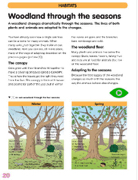
many oaks grow together they make an oak woodland. Here you can see, all in one place, many of the ways of adapting described on the previous pages (picture ).
The canopy
Oaks grow until their branches fit together to make a covering of leaves called a canopy. This is how the leaves get the light they need from the Sun. The canopy is thick with leaves and acorns for part of the year, but in winter
An oak woodland through the four seasons. Winter
the leaves are gone and the branches bare, windswept and cold.
The woodland floor
Many plants and animals live below the canopy. Buds, leaves, flowers, falling fruit and nuts are all food for animals that live on the woodland floor.
Adapting to the seasons
Because the food supply of the woodland changes so much with the seasons, the way the animals behave also changes.
Insects survive as eggs. Many stay in the soil or shelter under leaves or bark until spring.
Birds adapted to the cold feed on seeds, berries and shoots in the undergrowth.
Holly bush produces berries.
Spring
First leaves start to sprout on trees.
Birds that are not adapted to the cold winter return from winter homes in warmer parts of the world.
Primrose flowering is almost over.
Birds attracted to insects on tree.
Caterpillars hatch from eggs.
Bluebells begin to flower.
Squirrels use the nuts they stored in autumn.
Snowdrop
Hedgehog hibernates in bracken.


