


Page 21 - Curriculum Visions Dynamic Book. To close the book, close the tab.
P. 21
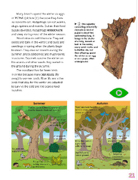
Many insects spend the winter as eggs or pupae (picture ) because they have no leaves to eat. Hedgehogs can eat worms, slugs, spiders and insects. But as their food supply dwindles, hedgehogs hibernate and sleep during most of the winter season.
Wood mice do not hibernate. They eat seeds and bark in the winter, and buds and seedlings in spring when the plants begin to shoot. They also eat insects during the summer, and blackberries and mushrooms in autumn. Squirrels survive the winter on the acorns and other seeds they buried in the ground during the autumn.
The woodland has far fewer birds
in winter because many migrate (fly away) to warmer lands. Blue tits and other birds that stay for the winter are adapted to survive the cold and the scarce food supplies.
This superbly camouflaged butterfly chrysalis (a kind of pupa) is about two centimetres long. It hangs in the shelter
of a twig, branch or leaf. In the winter, many adult moths and butterflies die, but their offspring spend the winter as an egg or as a pupa, often underground.
Squirrels eat fruits and nuts.
Summer
The canopy is a plentiful source of food for insects. Birds eat insects.
Trees spread their leaves to get as much sunlight as possible.
Autumn
Trees take back food stored in their leaves. Leaves turn brown and fall off.
Birds that cannot stand cold weather fly away.
Squirrel stores nuts in ground.
Hedgehog is active, eating insects and earthworms.
Undergrowth is fully grown.
Insects lay eggs. Many are laid in the soil for protection from cold.
Hedgehog prepares to hibernate.
21


