


Page 64 - Curriculum Visions Dynamic Book
P. 64
64
Indiana
Indianapolis, the capital city of Indiana
Founded 1821 Incorporated 1832 Elevation 715 ft (218 m) Population 820,445
Metro 1,756,241 (US: 33rd)
Indianapolis is the second largest city in the American Midwest.
Before the arrival of Europeans, the area was part of the parries and home to the Lenape (Delaware Nation) Native Americans.
Although it might not look it today, when Europeans arrived, this was a heavily-wooded region. The first Europeans to visit Indiana were
in the party of the French explorer René-Robert Cavelier, Sieur de La Salle. That was in 1679. French- Canadian fur traders soon heard about this area and began to trade. By 1702, Sieur Juchereau had built the first trading post near Vincennes. In 1715, Sieur de Vincennes built Fort Miami at Kekionga, now Fort Wayne. Other small trading post/forts followed. Later, British colonists arrived from the East, also anxious to take part in the fur trade. After the French and Indian war, Britain set aside the land west of the Appalachians for Indian use, calling it Indian Territory.
After the American Revolutionary War, however, control passed to the United States, who took a different view on the Indian Territory. In 1787 the U.S. defined present-day Indiana as part of its Northwest Territory. In 1800, Congress separated Ohio from the Northwest Territory, designating
the rest of the land as the Indiana Territory, with Vincennes as the capital. Later Michigan and Illinois were formed out of part of this vast land.
At this time Indianapolis did not exist, for the central and northern Indiana Territory had not been settled. Then, most Native American tribes in the state were removed to west of the Mississippi River in the 1820s and 1830s after U.S. negotiations and purchase of their lands.
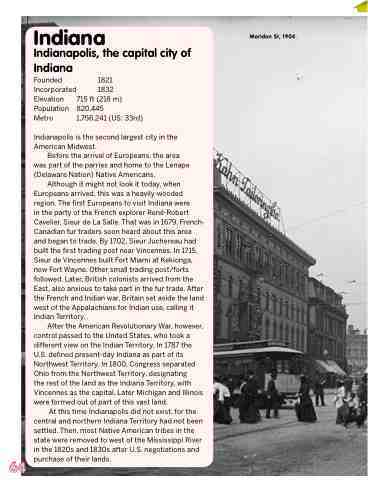
Meridon St, 1904.


