


Page 206 - Curriculum Visions Dynamic Book
P. 206
completed in 1853. Now it was advantage to many more people to move to Austin. Politicians and financiers moved and built grand mansions for themselves. By 1860 the population was 3,546, of which 1,019 were slaves.
This was still primarily ranching country, and cattlemen came to the city to use its saloons and cattle yards.
While Texas voted to leave the Union and join the Confederacy in 1861. After the war was over, many more black people moved to Austin. By 1870, 36% of Austin’s population was black.
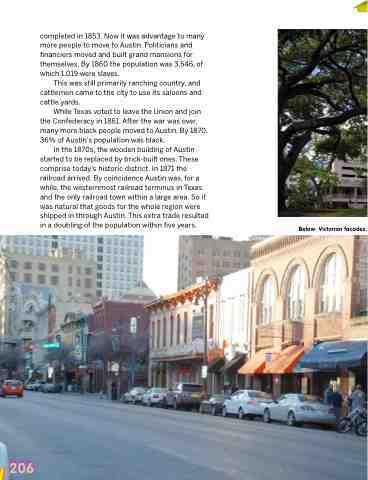
In the 1870s, the wooden building of Austin started to be replaced by brick-built ones. These comprise today’s historic district. In 1871 the railroad arrived. By coincidence Austin was, for a while, the westernmost railroad terminus in Texas and the only railroad town within a large area. So it was natural that goods for the whole region were shipped in through Austin. This extra trade resulted in a doubling of the population within five years.
Below: Victorian facades.
206


