


Page 196 - Curriculum Visions Dynamic Book
P. 196
196
Its trade involved hundreds of thousands of beaver pelts, deer skins, and buffalo hides destined for European and eastern markets. The fort was an outpost of the American
Fur Company. It did not belong to the U.S. Military. The United States Army bought Fort Pierre Chouteau in 1855 and it became the first military fort in the Upper Missouri. They brought in all of the materials they needed for barracks and so on by steamship. The army abandoned it a few years later and no trace remains of it today.
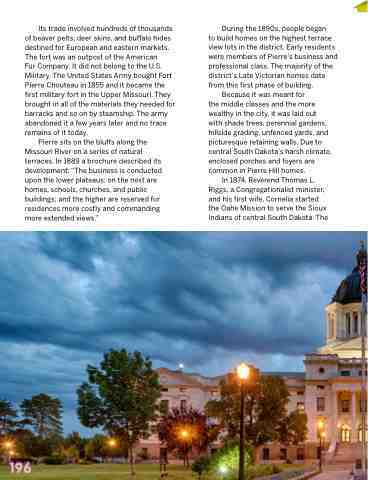
Pierre sits on the bluffs along the Missouri River on a series of natural terraces. In 1889 a brochure described its development: “The business is conducted upon the lower plateaus; on the next are homes, schools, churches, and public buildings; and the higher are reserved for residences more costly and commanding more extended views.”
During the 1890s, people began
to build homes on the highest terrace view lots in the district. Early residents were members of Pierre’s business and professional class. The majority of the district’s Late Victorian homes date from this first phase of building.
Because it was meant for
the middle classes and the more wealthy in the city, it was laid out with shade trees, perennial gardens, hillside grading, unfenced yards, and picturesque retaining walls. Due to central South Dakota’s harsh climate, enclosed porches and foyers are common in Pierre Hill homes.
In 1874, Reverend Thomas L. Riggs, a Congregationalist minister, and his first wife, Cornelia started the Oahe Mission to serve the Sioux Indians of central South Dakota. The


