


Page 15 - Curriculum Visions Dynamic Book
P. 15
the largest native population north of Mexico City. This was the largest single body of land irrigated in prehistoric times in North or South America. However, as with many other early cultures, no matter how successful they had been in the past, many simply disappeared, perhaps as recently as 500 years ago. The same happened, for example, to the Maya further south. These collapses might have been due to extreme drought even for these areas.
But not everyone moved away. The people who remained are the O’odham.
Spanish explorers traveled through the area in the 16th century. But their visit, as elsewhere in America, brought diseases which rapidly reduced the Native American populations.
The Spanish opened a mission in the Tucson area, but made no settlements anywhere near Phoenix. that would have to wait until the 19th century and the end of the Mexican-American War.
At first the area including Phoenix was included in the territory of New Mexico, and which later became Arizona.
Confederate Arizona was officially claimed by The South, and formally created by a proclamation by Jefferson Davis on February
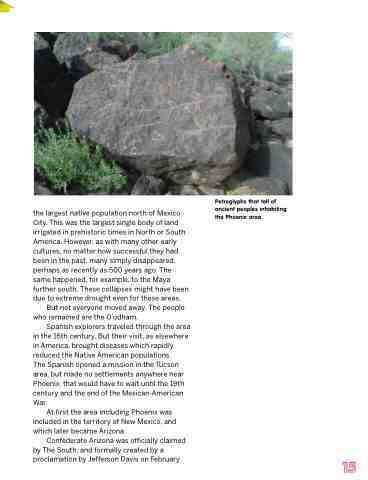
Petroglyphs that tell of ancient peoples inhabiting the Phoenix area.
15


