


Page 7 - Curriculum Visions Dynamic Book. To close the book, close the tab.
P. 7
powerful microscope just to see them, as is the case with tiny creatures called micro- organisms, or microbes.
It is not always easy to prove that some things are living. Look, for example, at a lichen (which is actually two different plant- like things growing very close together) growing on a stone (picture ). The lichen doesn’t seem to move, is often dry and crisp to the touch and it grows by less than a millimetre a year, so it looks much the same for a long time. In fact, to many people, it would appear to be a non-living thing, like a stain on the rock.
What living things share
Lichens, humans, trees, whales and all other living things have certain things in common: They take in food to make energy
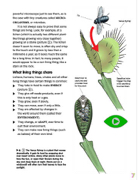
Fly
Venus flytrap
Insect prey is captured and provides food for the plant.
Sensitive hairs trigger the trap when anything touches them.
(picture ).
They give off waste products, even if this is only heat or a gas.
They grow, even if slowly.
They can move, even if only a little. They are affected by changes in
the world around them (called their environment).
They change, or adapt, over time to suit their environment.
They can make new living things (such as babies) of their own kind.
The Venus flytrap is a plant that moves dramatically. It gets its food by snapping shut over insect victims. Many other plants move to face the Sun, or open their flowers during the day and close them at night. Plants put on a windowsill will often turn their leaves to face the sunlight.
7


