


Page 11 - Curriculum Visions Dynamic Book. To close the book, close the tab.
P. 11
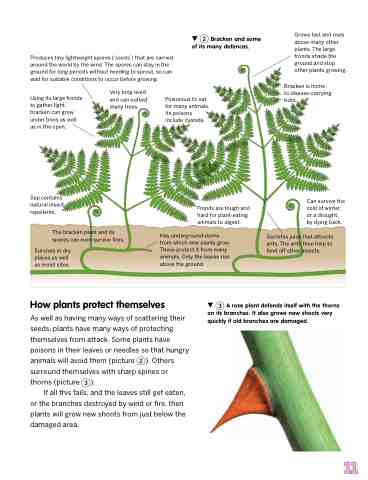
Produces tiny lightweight spores (‘seeds’) that are carried around the world by the wind. The spores can stay in the ground for long periods without needing to sprout, so can wait for suitable conditions to occur before growing.
Using its large fronds to gather light, bracken can grow under trees as well as in the open.
Sap contains natural insect repellents.
Very long-lived and can outlast many trees.
Poisonous to eat for many animals. Its poisons include cyanide.
The bracken plant and its spores can even survive fires.
Survives in dry places as well as moist sites.
Fronds are tough and hard for plant-eating animals to digest.
Has underground stems from which new plants grow. These protect it from many animals. Only the leaves rise above the ground.
Can survive the cold of winter, or a drought, by dying back.
Secretes juice that attracts ants. The ants then help to fend off other insects.
How plants protect themselves
As well as having many ways of scattering their seeds, plants have many ways of protecting themselves from attack. Some plants have poisons in their leaves or needles so that hungry animals will avoid them (picture ). Others surround themselves with sharp spines or thorns (picture ).
If all this fails, and the leaves still get eaten, or the branches destroyed by wind or fire, then plants will grow new shoots from just below the damaged area.
A rose plant defends itself with the thorns on its branches. It also grows new shoots very quickly if old branches are damaged.
Bracken and some of its many defences.
Grows fast and rises above many other plants. The large fronds shade the ground and stop other plants growing.
Bracken is home to disease-carrying ticks.
11


