Explore these further resources...
(These links take you to other parts of our web site, never to outside locations.)
You can search in these books:
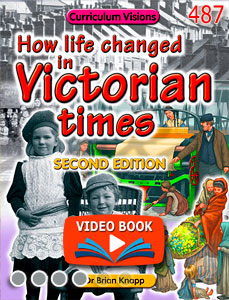
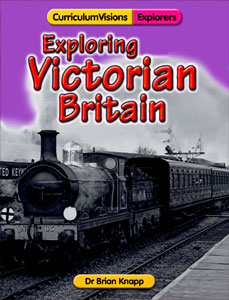
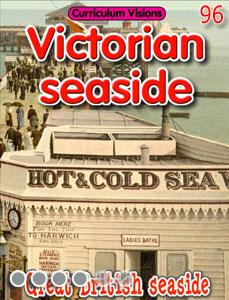



Victorian Britain changed enormously between 1837 and 1901.
Queen Victoria came to the throne in 1837 and died in 1901. Her reign lasted more than sixty years, so people born near its beginning could grow old in a country that looked completely different by its end.
There was no single Victorian way of life. A wealthy family with servants, a shopkeeper, a factory worker, a farm labourer and a child in a workhouse lived very different lives. What links them is that they experienced a century in which industrialisation, railways, cities, science, empire and political reform changed Britain at remarkable speed.
↑ ContentsThe Victorians did not invent factories, canals, steam engines or railways. All were already being developed before Victoria became queen. The Industrial Revolution had created the basic machinery of the new world.
What the Victorians did was expand it. Factories became larger, steam engines more powerful, iron and later steel production grew, and machine-made goods reached far more people. Mass production made some goods cheaper, while a rapidly growing population created an enormous market. Victorian Britain was industrialisation operating on a national scale.
↑ ContentsThe railway age had begun before 1837, but Victorian engineers built a dense network linking towns, ports and industrial districts. Journeys that had taken days could be made in hours. Fresh food, newspapers, letters and manufactured goods could move quickly around the country.
Railways also changed where people lived. Stations allowed suburbs to grow beyond crowded city centres. Seaside resorts expanded because ordinary families could reach the coast by train. Railway timetables even helped create the need for standardised time across the country. The railway was not merely transport: it reorganised everyday life.
↑ ContentsIndustrial towns had grown very quickly and often without proper planning. Early Victorian districts could contain crowded courts and terraces with shared privies, polluted wells and open drains. Diseases such as cholera spread easily where drinking water was contaminated.
Victorian reformers, engineers and local councils gradually tackled these problems. Sewers, piped clean water, refuse collection, street lighting and building regulations improved many towns. Better terraced housing was built, parks and public buildings appeared, and later trams and suburban railways helped cities spread outward. Improvement was uneven, but the modern serviced city began to take shape.
↑ ContentsVictorian wealth was built alongside severe poverty. Men, women and children worked in factories, mines, workshops, docks, farms and domestic service. Hours could be long and accidents common. Poor families had little protection if wages stopped through illness or unemployment.
Campaigners exposed dangerous conditions and Parliament gradually introduced laws limiting children's work, improving mine and factory safety and regulating hours. Trade unions became more important. The workhouse remained feared, but charities, reformers and eventually public authorities increasingly argued that poverty, health and housing were matters society could not simply ignore.
↑ ContentsEducation expanded greatly. By the later Victorian period, elementary schooling had become compulsory for children, although attendance and quality varied. Reading and writing spread through the population, helping newspapers, magazines and popular books reach huge audiences.
Victorian towns also developed new kinds of shopping and leisure. Corner shops served neighbourhoods, while larger shopping streets, covered markets, arcades and department stores catered especially for the growing middle class. Music halls, football clubs, public parks and seaside holidays became part of popular culture. Bank holidays and cheaper railway fares helped give more people time away from work.
↑ ContentsVictorian life was transformed by communication and engineering. The electric telegraph could send messages across the country almost instantly. The telephone followed later. Photography recorded people and places in a new way, while improved printing spread information cheaply.
Gas lighting brightened streets and homes before electricity began to appear in the later nineteenth century. Iron ships became steel ships, steamships crossed oceans faster, and new steel-making processes provided stronger material for bridges, railways and machinery. By the end of the reign, bicycles and early motor cars were pointing towards the twentieth century.
↑ ContentsVictorian Britain ruled or controlled territories across the world. The empire supplied raw materials, provided markets for British manufactured goods and gave Britain naval bases and trading routes. London became a major centre of world finance and shipping.
For many Victorians the empire was presented as a source of pride and power. But empire also depended on conquest, unequal power and the rule of peoples who had not chosen British government. Resistance occurred in many places. Understanding Victorian Britain therefore means seeing both its global wealth and the coercion and conflict on which much imperial rule depended.
↑ ContentsVictoria herself did not personally run the government. Britain was a constitutional monarchy in which elected politicians and Parliament made policy. Even so, the Queen became an important symbol of the age, especially after her long reign made her seem a permanent part of national life.
Victorians often praised hard work, respectability, self-discipline, family and duty. Those ideals were real, but so were arguments about class, religion, women's rights, voting, poverty and science. The period was not simply orderly: it was full of debate about what a modern society ought to become.
↑ ContentsBy the late Victorian period Britain was still at the height of its global power. It possessed the world's largest empire, a huge merchant fleet and an economy built on finance, trade and industry. But the balance was already beginning to change.
Across the Atlantic, the United States was growing extraordinarily quickly. Its population expanded, railways crossed the continent, enormous supplies of coal, iron and oil fed industry, and factories produced steel, machinery and consumer goods on an ever larger scale. American firms were developing methods of mass production that would become central to the next century.
So the end of the Victorian age is also a useful doorway into the twentieth century. Britain remained a world power, but it was no longer the only industrial giant. A rapidly rising USA was becoming both a competitor and, increasingly, one of the powers that would shape the modern world.
↑ ContentsVideo: Victorian times, an introduction.
Video: Nineteenth-century terraced houses.
Queen Victoria's very long reign gave her name to the age. You can open the short student biography below if you want to find out more about her life and family.