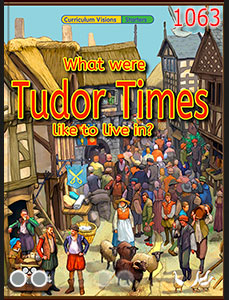
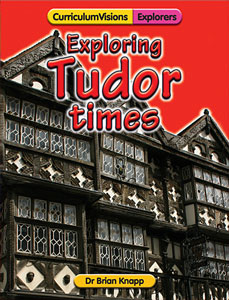
What is meant by Tudor? Tudor Times is the period when the Tudor monarchs ruled England, from Henry VII in 1485 to Elizabeth I in 1603.
The Tudor family ruled England from 1485 to 1603.
WHAT DO WE MEAN BY TUDOR TIMES?
The Tudor monarchs ruled England from Henry VII in 1485 to the death of Elizabeth I in 1603. It was only a little over a century, but during it the monarchy became stronger, the English Church broke from Rome, overseas voyages expanded and towns and houses changed.
The Tudor period also sits in the middle of a much longer story. Many Tudor developments began in medieval times, while exploration, colonies, trade and political conflict continued under the Stuarts after 1603.
Henry Tudor defeated Richard III at Bosworth in 1485 and became Henry VII. After years of struggles between powerful noble families, he worked to strengthen the crown and reduce the threat from private armies.
England did not suddenly become modern in 1485. Tudor rulers inherited medieval towns, castles, farming and the wool trade. But a more settled kingdom gave some merchants and landowners greater confidence to invest and build.
Most Tudor people still lived in the countryside. In towns, timber-framed houses stood beside narrow streets. Shops and workshops were often at street level, while families lived behind or above them. Markets connected farmers, drovers and craftspeople.
Wealthier families increasingly built comfortable houses with chimneys, fireplaces, glass windows and impressive rooms. Poorer families had much simpler homes. The fine timber-framed houses that survive today do not show how everyone lived.
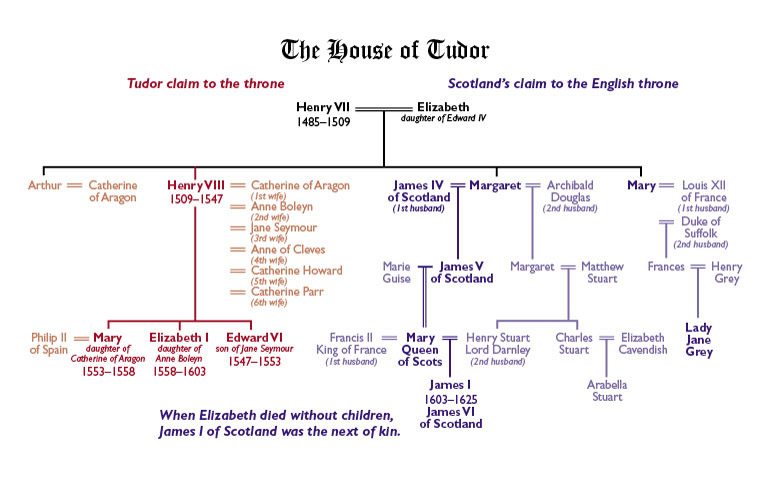
Henry VIII wanted his marriage to Catherine of Aragon ended, but the Pope would not grant what he wanted. Henry rejected the Pope’s authority over the English Church and made himself its supreme head.
His government closed monasteries and took their land and wealth. Some buildings were reused, while others fell into ruin. This changed local jobs, land ownership and services, as well as religion.
Under Elizabeth I, England competed with Spain at sea and supported opponents of Spanish rule in the Netherlands. Ships could be used for trading, exploration and fighting.
In 1588 Philip II sent the Spanish Armada as part of a plan to invade England. English attacks, problems with the Spanish plan and severe weather contributed to its failure. Rivalry at sea did not end there.
England’s medieval wool trade continued, but finished cloth became a particularly valuable Tudor export. Merchants organised buying, making and shipping, and London grew as a centre of commerce.
Trade did not enrich everybody equally. Some merchants and landowners built fine houses and bought expensive furnishings, while many workers earned modest wages. Towns and countryside depended on one another.
English sailors joined a wider European search for trading routes and opportunities overseas. John Cabot crossed the North Atlantic in 1497, while later voyagers such as Francis Drake travelled much farther.
These journeys expanded geographical knowledge but were also tied to raiding, rivalry, exploitation and claims to lands where people already lived. Tudor voyages helped prepare the way for later overseas expansion.
Attempts to establish a settlement at Roanoke in Elizabeth I’s reign failed. Permanent English colonies in North America began after Tudor rule ended: Jamestown was founded in 1607 and Plymouth in 1620.
The Tudor story therefore continues into Stuart times. English colonisation had profound consequences for Indigenous peoples, and Atlantic expansion later became deeply connected with forced labour and slavery.
Printing allowed books to be made in larger numbers and helped ideas spread. Grammar schools, scholars and merchants all benefited from reading and writing, although education was very unequal.
New religious arguments and scientific questions travelled more widely through printed words. Tudor England was changing, but old beliefs and new ideas often existed side by side.
Elizabeth died without a child in 1603, and James VI of Scotland also became James I of England. The crowns were now held by the same monarch. Under the Stuarts, overseas colonies expanded and Atlantic and global trade became increasingly important.
The seventeenth century also brought the Gunpowder Plot, conflict between king and Parliament, Civil War, the execution of Charles I, the Commonwealth and the Restoration of Charles II. London suffered plague and the Great Fire, while science, banking, navigation and commerce developed rapidly.
These Stuart changes form the bridge between Tudor England and the later world of expanding trade, finance, empire and eventually industrialisation. Leaving them out would make the next part of the story appear to come from nowhere.
The toolkit screen link will take you to a library containing a selection of:
an i-topic, more books, pictures, videos and teacher's stuff related to the search word.