What is a desert? A desert is a region that has few plants because the rainfall is very low and unreliable.
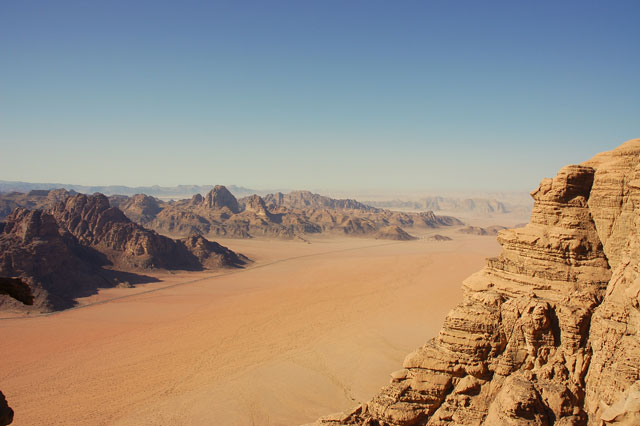
Wadi Rum desert, Jordan. Deserts are not all seas of sand.
WHAT MAKES A DESERT?
A desert is a place where very little rain falls. Rain is also unreliable: a place may wait months, or sometimes years, between useful falls of rain.
Because water is scarce, plants are usually spread far apart. That is one of the easiest ways to recognise a desert biome. A biome is a large natural region whose climate affects the plants and animals that can live there.
Many deserts are hot, but being hot does not make a place a desert. It is the lack of rain that matters most.
Pictures often show deserts covered by enormous sand dunes, but much desert land is bare rock or stony ground. Even the Sahara contains great areas with little or no sand.
Desert rocks are slowly broken into smaller pieces by weathering. Sudden floods can carry stones, gravel, sand and mud out of mountain valleys and spread them across the plains.
Wind then moves the smallest particles. Dust can be carried high into the air, while heavier sand grains bounce along close to the ground. In some places the sand collects to make dunes and huge sand seas.
A sand dune is a mound or ridge of loose sand shaped by wind. Sand is blown up the gentler side of a dune, crosses the crest and then falls down the steeper side.
This means that a dune can slowly move across the desert. The sand is not simply blown away: grains are continually moved from one side of the dune to the other.
Dunes come in different shapes because wind direction, the amount of sand and the shape of the ground vary from place to place. Small ripples on the surface show that even the outer skin of a dune is constantly being reshaped.
Deserts receive little rain, but this does not mean that they have no water. Water can be stored underground in cracks and spaces in rock. Deep plant roots may reach it, and people can sometimes reach it by digging wells.
An oasis is a place where underground water reaches, or comes close to, the surface. Plants can grow there and people may be able to settle and farm.
Rain can also be sudden and heavy. Water rushes down normally dry valleys and can cause a flash flood. So a desert can be both extremely dry and, for a short time, dangerously flooded.
In a hot desert, the strong Sun can heat bare rock and sand very quickly during the day. With little cloud and few plants to provide shade, the ground may become extremely hot.
After sunset, heat can escape quickly into the clear sky. Nights can therefore become surprisingly cool or even cold.
Plants, animals and people must cope not only with very little water, but also with these large changes in temperature.
Desert plants have features that help them survive with little water. Some have very deep roots that reach water underground. Others spread roots widely near the surface so that they can collect rain quickly when it falls.
Some plants store water in thick stems or leaves. Small leaves, waxy surfaces or spines can reduce the amount of water that is lost.
After rain, seeds that have waited in the dry ground may grow very quickly. For a short time, parts of a desert can become covered with flowers before the ground dries again.
Many desert animals avoid the hottest part of the day. They shelter in burrows, beneath rocks or in shade and become active in the evening or at night.
Animals also need ways to save water. Some obtain much of the moisture they need from their food. Others lose very little water from their bodies.
Body shape and behaviour can help with heat too. A small animal may stay underground by day, while larger animals such as camels have features that help them travel long distances through hot, dry country.
Although desert plants are scattered, they are the beginning of the desert food web. Seeds, leaves, roots and stems provide food for insects, rodents and other plant-eaters.
These animals become food for lizards, snakes, birds and other predators. When plants and animals die, their remains are broken down and their nutrients return to the soil.
There is less living material than in a wet forest, but the organisms still depend on one another. A desert is a complete biome, not an empty place.
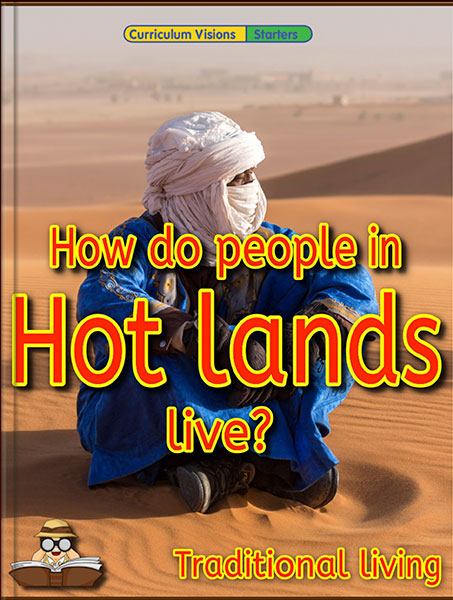
People have lived in deserts for thousands of years. Some groups traditionally moved from place to place with their animals or traded goods across the desert. Others settled where reliable water could be found.
Oases allowed crops to be watered and settlements to grow. Routes between wells and oases became important for journeys and trade.
Modern roads, towns and tourism have changed desert life, but water is still the key resource. Where water can be found often decides where people can live.
The toolkit screen link will take you to a library containing a selection of:
an i-topic, more books, pictures, videos and teacher's stuff related to the search word.