


Page 76 - Curriculum Visions Dynamic Book
P. 76
76
About 60 mi/100km west of Kansas City, Missouri, three Native American sisters began to operate a ferry service allowing travelers to cross the Kansas River at what is now Topeka.
In the early 1850s, a new military road was
built from Fort Leavenworth through Topeka to Fort Riley. Then, in 1854, a group of nine men decided to found the town of Topeka. As they built a group of cabins, so others came to join them. There was soon sufficient market to make it worthwhile steamboats arriving at the wharf the men had built on the riverside. The steamboats brought meat, lumber, and flour and went back east with potatoes, corn, and wheat. The city was laid out in 1854.
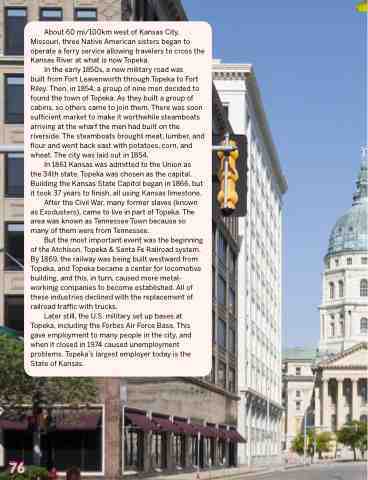
In 1861 Kansas was admitted to the Union as the 34th state. Topeka was chosen as the capital. Building the Kansas State Capitol began in 1866, but it took 37 years to finish, all using Kansas limestone.
After the Civil War, many former slaves (known as Exodusters), came to live in part of Topeka. The area was known as Tennessee Town because so many of them were from Tennessee.
But the most important event was the beginning of the Atchison, Topeka & Santa Fe Railroad system. By 1869, the railway was being built westward from Topeka, and Topeka became a center for locomotive building, and this, in turn, caused more metal- workinjg companies to become established. All of these industries declined with the replacement of railroad traffic with trucks.
Later still, the U.S. military set up bases at Topeka, including the Forbes Air Force Base. This gave employment to many people in the city, and when it closed in 1974 caused unemployment problems. Topeka’s largest employer today is the State of Kansas.


