


Page 244 - Curriculum Visions Dynamic Book
P. 244
The railroad’s arrival in 1867 immediately caused a rush of settlement, and in the first year there were over 4000 people living in Cheyenne. As a result, it was nicknamed “Magic City of the Plains”.
To act as protection for the area, the U.S. military built Fort D. A. Russell, some 3 miles west of the city. This later became Francis E. Warren Air Force Base.
Essentially cattle ranching country, it is too dry for cropland without irrigation. Cheyenne was able to build stockyards to focus cattle to the railroad for shipment to big cities. It was Wyoming Stock Growers Association that met at The Cheyenne Club, and whose members were influential in setting out what would later become state laws. It was also in a region where many prospectors had high hopes of finding success.
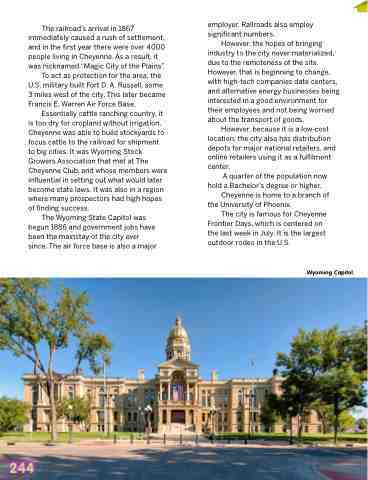
The Wyoming State Capitol was begun 1886 and government jobs have been the mainstay of the city ever since. The air force base is also a major
employer. Railroads also employ significant numbers.
However, the hopes of bringing industry to the city never materialized, due to the remoteness of the site. However, that is beginning to change, with high-tech companies date centers, and alternative energy businesses being interested in a good environment for their employees and not being worried about the transport of goods.
However, because it is a low-cost location, the city also has distribution depots for major national retailers, and online retailers using it as a fulfilment center.
A quarter of the population now hold a Bachelor’s degree or higher.
Cheyenne is home to a branch of the University of Phoenix.
The city is famous for Cheyenne Frontier Days, which is centered on the last week in July. It is the largest outdoor rodeo in the U.S.
Wyoming Capitol.
244


