


Page 222 - Curriculum Visions Dynamic Book
P. 222
Virginia
Richmond, the capital city of Virginia
Founded Incorporated Elevation Population Metro
1737
1742 (city from 1871) 45.7 m (166.45 ft) 217,853
1,260,029 (44th)
Richmond is named for a town near London, England. It is now the fourth biggest city in Virginia.
Like many colonial cities, Richmond was founded where the inland hills known as the Piedmont meets the Coastal Plain. This is the furthest upriver that boats could reach before they met rapids and waterfalls on the rivers. As this was where boats had to unload their cargoes, and carry (portage) them around the rapids, it was a natural place to start a settlement.
Before the arrival of English colonists, Native Americans has been living in this area for thousands of years. It was an important village of the Powhatan Confederacy. The first colonists arrived from Jamestown in 1609. Captain Christopher Newport led explorers northwest up the James River. However colonists did not set up the permanent settlement of Richmond until 1737, when planter William Byrd II arranged for a town grid to be laid out.
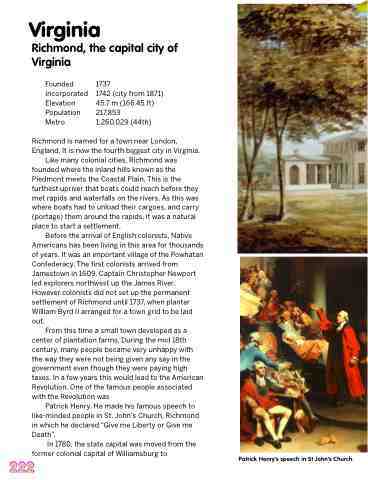
From this time a small town developed as a center of plantation farms. During the mid 18th century, many people became very unhappy with the way they were not being given any say in the government even though they were paying high taxes. In a few years this would lead to the American Revolution. One of the famous people associated with the Revolution was
Patrick Henry. He made his famous speech to like-minded people in St. John’s Church, Richmond in which he declared “Give me Liberty or Give me Death”.
In 1780, the state capital was moved from the former colonial capital of Williamsburg to
Patrick Henry’s speech in St John’s Church.
222


