


Page 20 - Curriculum Visions Dynamic Book
P. 20
20
In 1928 a new airport was opened and named Sky Harbor.
In 1940 Phoenix had a population of 65,000,
with most people working in cotton, citrus and
cattle farming with retail, wholesale, banking, and governmental services. Tourism was just beginning to blossom for the winter months.
The postwar boom was based on the arrival of young veterans who had been stationed at military bases during World war 2 and wanted to be involved in its new industries. In turn, companies realizing there were many people waiting to be employed, moved to Phoenix. In 1948 the new high-tech industry began when Motorola chose Phoenix for the site of
its new research and development center for military electronics. They were followed by Intel, McDonnell Douglas and others, so that now high-tech is a major employer.
Industry was told of cheap land, good transportation, low-wage rates, low union problems, and easy access to the West Coast markets.
The city grew explosively in the 1950s. Now air conditioning was easy to instal and made it easy for people to live in the extreme heat known to Phoenix during its long summers.
In 1968, the Central Arizona Project was approved by President Lyndon B. Johnson, assuring future water supplies for Phoenix, Tucson, and the agricultural corridor in between.
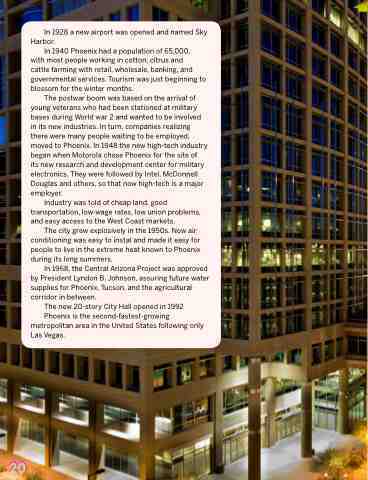
The new 20-story City Hall opened in 1992
Phoenix is the second-fastest-growing metropolitan area in the United States following only Las Vegas.


