


Page 178 - Curriculum Visions Dynamic Book
P. 178
In the early days of the 19th century, when pioneers were making their way to the Ohio Valley, the town was important for people needing to get provisions before setting off west on foot. Its location at a pass, and being fairly central within Pennsylvania, meant that it was made the Pennsylvania state capital in October 1812.
Situated in the fertile Susquehanna valley, with forested hills nearby, Harrisburg was a town that acted as a market for the surrounding farmers and loggers. It was still a rural town in 1822 when brick capitol was completed.
In 1834 the Pennsylvania Canal was built to help provide a route around the Fall Line rapids in the river.
Again, because it was at an important gap in the mountains, railroads were built to Harrisburg and then on west.
But Harrisburg changed dramatically when steel foundries were built in the 1850s. Both
iron ore and anthracite coal was available in the Allegheny Mountains, and transport from the mills could get finished goods to the eastern cities. Steel and iron manufacturing took over from trade as the major employer, with steel mills lining the river. The Pennsylvania Steel Company plant was the most important, and opened in 1866. A part of Harrisburg, just south of the city, became called Steelton, and the Pennsylvania Steel company’s mills and workers houses were built side by side. One of its main products was railroad rails. It employed 16,000 people. In later
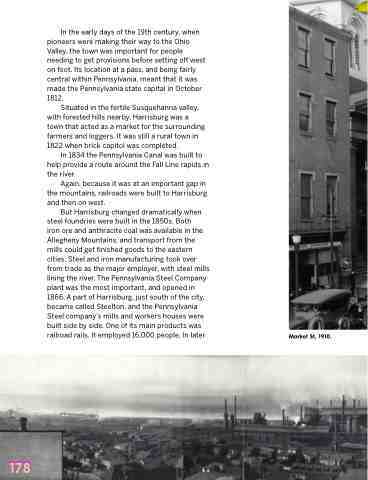
Market St, 1910.
178


