


Page 156 - Curriculum Visions Dynamic Book
P. 156
North Dakota
Bismark, the capital of North Dakota
Founded 1872
Elevation 1,686 ft (514 m) Population 61,272
Metro 126,597 (312th)
Bismarck is on the east bank of the Missouri River. Bismark is the second largest city in the rural state of North Dakota is the second most populous city in North Dakota after Fargo.
Bismarck was founded in 1872. It became North Dakota’s capital city when the State was created from the Dakota Territory in 1889.
The North Dakota State Capitol, is the tallest building in the state
For thousands of years before European-American immigrants arrived, the site of Bismark was home to Native Americans. The Mandans had a farming-based culture and lived in earth lodges so that they could withstand the harsh winter weather. (A Mandan village is reconstructed within the modern city.)
By the time Lewis and Clark reached the area, the main people were the Mandan. They called the site of Bismark, ‘the place of the tall willows’.
It was an important river crossing for Native Americans, and the new immigrants called it the Missouri Crossing, named by the Lewis and Clark Expedition because they crossed the river there. The new town that was founded at the Missouri Crossing was largely a creation of the Northern Pacific Railroad. They named it Edwinton, after NPR chief engineer Edwin Ferry Johnson.
The first buildings constructed were at present- day Camp Hancock, then known as Camp Greeley, which was built as an infantry post to provide protection for the railroad employees from skirmishes with Native Americans, and a supply depot for the railroad as it forged west.
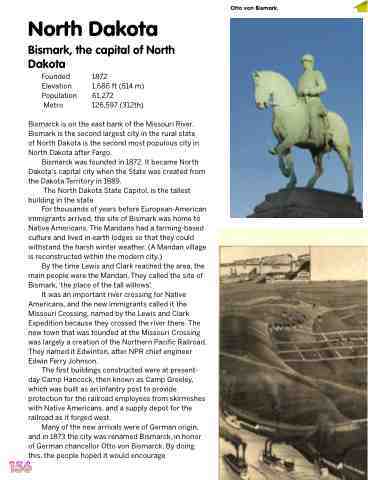
Many of the new arrivals were of German origin, and in 1873 the city was renamed Bismarck, in honor of German chancellor Otto von Bismarck. By doing this, the people hoped it would encourage
Otto von Bismark.
156


