


Page 128 - Curriculum Visions Dynamic Book
P. 128
Nebraska
Lincoln, the capital city of
Nebraska
Founded as Lancaster 1856
Renamed Lincoln Incorporated Elevation Population
Metro
1867
1869
1,176 ft (358 m) 258,379
318,945 (US: 155th)
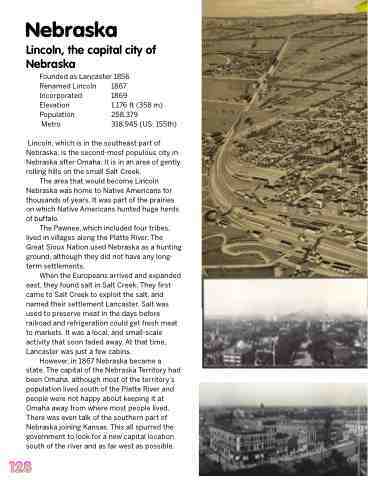
Lincoln, which is in the southeast part of Nebraska, is the second-most populous city in Nebraska after Omaha. It is in an area of gently rolling hills on the small Salt Creek.
The area that would become Lincoln Nebraska was home to Native Americans for thousands of years. It was part of the prairies on which Native Americans hunted huge herds of buffalo.
The Pawnee, which included four tribes, lived in villages along the Platte River. The Great Sioux Nation used Nebraska as a hunting ground, although they did not have any long- term settlements.
When the Europeans arrived and expanded east, they found salt in Salt Creek. They first came to Salt Creek to exploit the salt, and named their settlement Lancaster. Salt was used to preserve meat in the days before railroad and refrigeration could get fresh meat to markets. It was a local, and small-scale activity that soon faded away. At that time, Lancaster was just a few cabins.
However, in 1867 Nebraska became a state. The capital of the Nebraska Territory had been Omaha, although most of the territory’s population lived south of the Platte River and people were not happy about keeping it at Omaha away from where most people lived. There was even talk of the southern part of Nebraska joining Kansas. This all spurred the government to look for a new capital location south of the river and as far west as possible.
128


